
A slide in truck camper is the best choice for pickup owners who want a removable, customizable camping setup without giving up their truck for daily use. A permanently mounted expedition camper suits a dedicated overland vehicle, and an adventure van suits travelers who want one integrated vehicle and don’t own a pickup. This guide compares all three options, explains what to check before buying a slide in truck camper (payload, dimensions, and fitment), and shows how a custom project works in practice.
What Is a Slide-In Truck Camper?
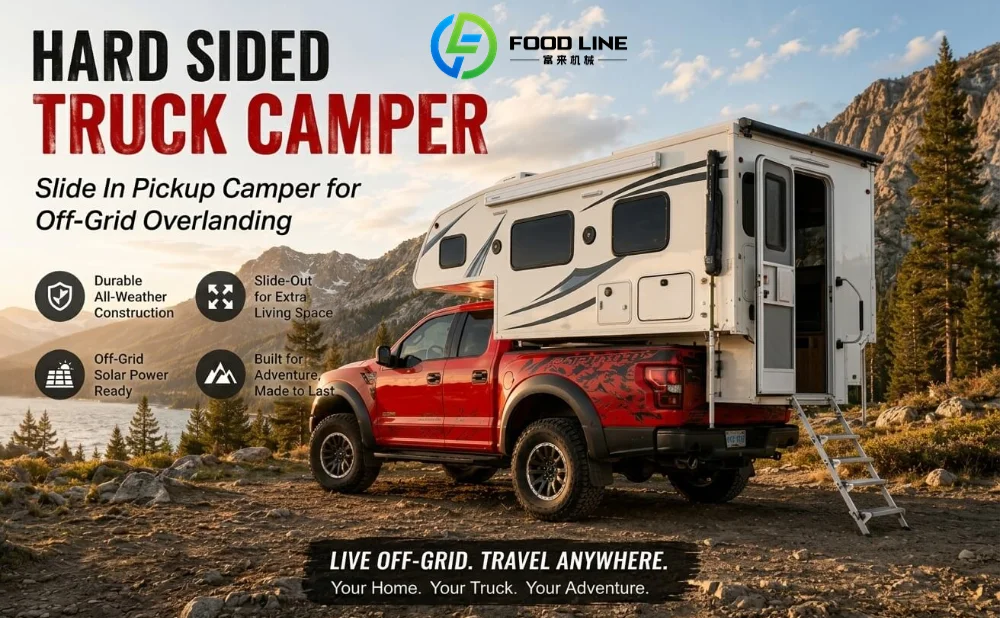
A pop up slide in truck camper (also called a slide-on camper, slide in camper, or ute camper in Australia) is a self-contained living unit that sits on the bed or tray of a pickup truck. It can be loaded on and removed when you don’t need it, so the pickup goes back to being a normal truck.
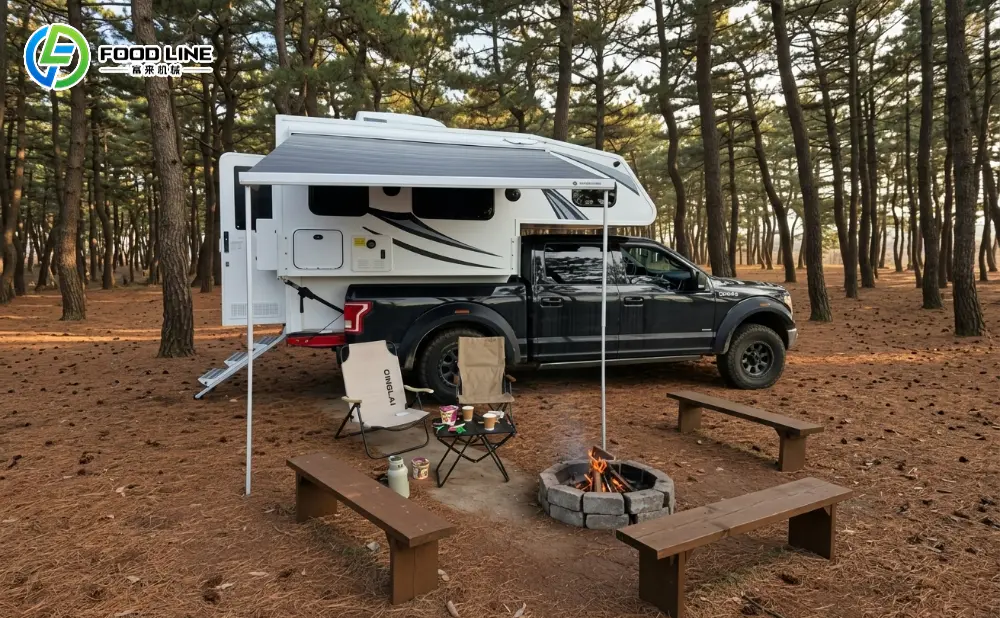
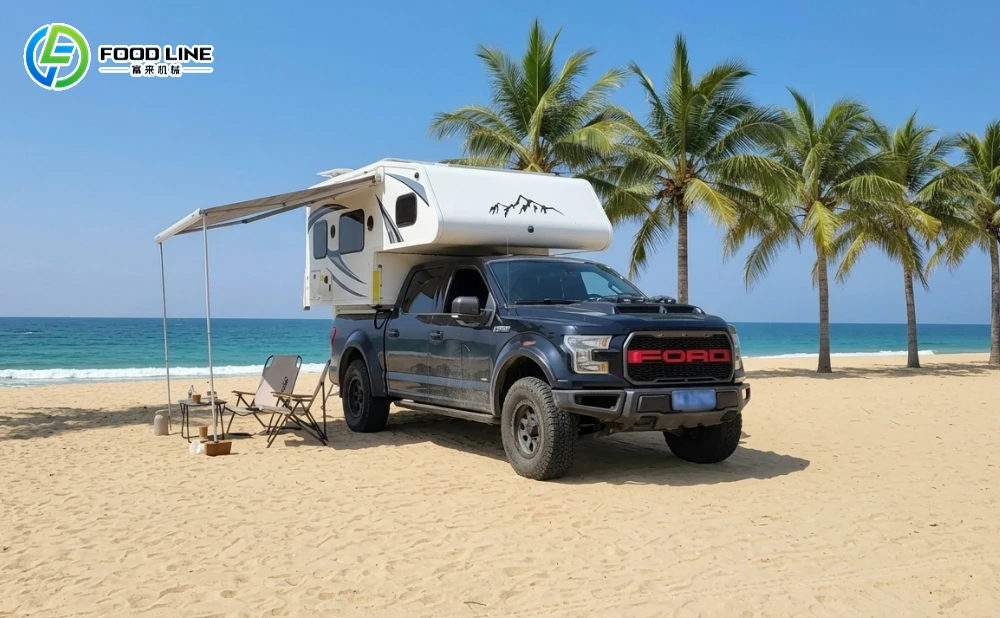
Slide in campers are used on popular pickups such as the Toyota Hilux, Ford Ranger, Isuzu D-Max, Toyota Tacoma, Nissan Navara, GWM Cannon, and full-size trucks like the Ford F-150 or Ram 1500, as long as the truck’s payload and dimensions suit the camper.
Three Camper Options at a Glance
| Camper Type | Best For | Main Advantage | Main Limitation |
| Permanently mounted expedition camper | Dedicated overland vehicles | Integrated, stable setup | Less flexible for other vehicle uses |
| Slide in truck camper | Pickup owners | Removable and customizable | Limited by truck size and payload |
| Converted adventure van | Long road trips | One integrated living space | Camper and vehicle cannot be separated |
Slide-In vs Permanently Mounted Expedition Camper
The biggest difference is how the camper connects to the vehicle. A permanently mounted expedition camper becomes part of the vehicle. A slide-in camper can be removed.
Choose a permanently mounted camper if:
- The vehicle is used mainly for overlanding.
- You want a fixed configuration you will keep for years.
- You are building the whole vehicle around the camper.
Choose a slide-in truck camper if:
- You already own a pickup and still need it for work or daily driving.
- You want a camper you can remove, store, or move to another suitable truck.
- You want a compact, customized setup for off-road camping.
The trade-off is simple: permanent mounting gives a more integrated build, while a slide-in gives flexibility. For most owners who use their truck for more than camping, the slide-in is the more practical choice.
Slide In Truck Camper vs Converted Adventure Van
An adventure van makes the vehicle itself the camper. A slide-in truck camper separates the living unit from the base vehicle.
| Factor | Slide-In Truck Camper | Converted Adventure Van |
| Base vehicle | Pickup truck | Van |
| Camper separation | Possible | Usually not |
| Vehicle flexibility | Higher | Lower |
| Daily vehicle use | Truck usable without the camper | Camper is part of the van |
| Cab-to-living-area access | Usually separate | Walk-through |
| Off-road ability | Depends on the pickup | Depends on the van |
| Changing vehicles | Camper can move to another suitable truck | Requires another conversion |
If you already own a capable pickup, a slide-in camper avoids buying and converting a dedicated van. An adventure van, on the other hand, offers easier movement between cab and living area and often more integrated interior space.
Pros and Cons of a Slide In Truck Camper
Pros
- Removable, so the truck stays useful for work and daily driving
- Can be customized around your truck, bed, or tray
- Often cheaper than buying and converting a dedicated vehicle if you already own a pickup
- Compact footprint suits narrow tracks and off-road camping
- Can be moved to a new truck later, if dimensions allow
Cons
- Limited by your truck’s payload and dimensions
- Raises the centre of gravity, which may call for suspension upgrades
- Less interior space than a large van or fixed-body camper
- No walk-through between the cab and living area
- Loading and unloading needs a proper support system
When Is a Slide In Truck Camper the Better Choice?
A slide in truck camper is usually the better choice if you answer yes to most of these:
- Do you already own a suitable pickup?
- Do you need the truck for work or daily use when you aren’t camping?
- Do you want a layout designed around your truck or tray?
- Do you want a compact camper for off-road travel?
Camper type alone doesn’t determine off-road performance. The vehicle, camper weight, dimensions, and mounting system all need to match your terrain and travel style.
Is Your Truck Suitable? Payload, Size, and Fitment
Payload is the most important number when choosing a slide-in truck camper. The camper, its water, gas, batteries, gear, passengers, and any other accessories (bull bar, roof racks, canopy) all count against your truck’s payload.
Simple payload check :
- Find your truck’s legal payload in the vehicle compliance plate or manual (for example, 1,000 kg).
- Subtract accessories already fitted (for example, 150 kg).
- Subtract passengers and cargo in the cab (for example, 200 kg).
- What remains is the budget for the camper and everything inside it.
The loaded weight of the camper, including water, gas, batteries, and gear, must stay within that figure. Always confirm the numbers against your own vehicle’s specifications and local regulations.
Information to give your supplier
- Vehicle brand, model, and model year
- Cab configuration
- Bed or tray type
- Tray length, width, and side height
- Mounting position and wheel arch position, if applicable
- Available payload
Different versions of the same pickup can have different dimensions, so never assume that a camper made for one model year will fit another.
Camper specifications to request before ordering
- Overall length, width, and height
- Pop-up height
- Dry weight and estimated loaded weight
- Interior dimensions
- Mounting requirements
For a tray-mounted setup, the aluminium tray needs separate attention. Tray construction, mounting points, and dimensions can differ from a standard pickup bed, so the mounting arrangement must be confirmed before production.
How Much Does a Pop Up Camper Cost?
Price depends on size, build quality, materials, configuration, and whether the camper is a standard model or custom. [Basic models start from USD 4500, fully equipped custom pop-up campers typically range from USD 6000 to USD 12000.]
The main cost drivers are:
- Camper type (hard-side, pop-up, tray style)
- Size and weight
- Interior furniture and cabinets
- Kitchen setup, including an external kitchen cabinet
- Electrical equipment (battery, solar, inverter, lighting)
- Water system and heating or cooling
- Optional accessories
- Shipping, import duties, and local compliance
When comparing quotes, don’t compare only the product price. Compare what is included: equipment, shipping method, destination, and after-sales support.
Can a Pop UP Camper Be Customized?
Yes, customization is one of the biggest advantages of a slide-in truck camper. A supplier can usually adjust:
- Interior furniture and storage
- Kitchen cabinets
- Sleeping layout
- Windows and doors
- Exterior cabinets
- Electrical equipment
- Optional accessories
To control your budget, ask for a basic configuration first, then separate essential equipment from optional upgrades. This makes different quotes easy to compare without redesigning the whole camper.
Why design drawings matter
For a custom camper, a design drawing lets both sides confirm the project before production. Before manufacturing starts, confirm:
- Vehicle compatibility
- Camper dimensions
- Interior layout and cabinet positions
- Equipment locations
- Mounting arrangement
- Optional items
Also ask whether the configuration can change after you review the first design.
FAQs about Pop Up Truck Campers
Yes. A pop up truck camper works well for overlanding when its weight, dimensions, mounting system, and vehicle compatibility match your intended use.
A permanently mounted camper stays integrated with the vehicle. A slide in camper installs on a suitable pickup and can be removed when needed.
If you already own a pickup and want to keep using it separately, a slide-in truck camper is usually better. If you want one integrated vehicle and living space and don’t own a pickup, an adventure van is usually the better fit.
Yes, if the tray dimensions, mounting arrangement, camper dimensions, and vehicle specifications are compatible. Confirm this with the supplier before production.
Many can be customized, including layout, cabinets, kitchen, windows, and electrical equipment. Available options depend on the supplier and camper design.
At minimum: vehicle model and year, bed or tray type, key tray dimensions, and available payload.
Check the payload on your vehicle’s compliance plate or manual, then subtract accessories, passengers, and cargo. The remainder is the budget for the loaded camper.
Ask about fitment, dimensions, customization, design drawings, production time, shipping, payment terms, previous projects, and production updates.
Ready to Build Your Custom Truck Camper?
Whether you drive a Ford Ranger, Toyota Hilux, RAM 1500, or GWM Cannon, our engineering team can help design a lightweight, fit-for-purpose slide-in camper tailored to your vehicle’s payload and tray dimensions. If you are looking for a custom truck camper, send us:
- Your vehicle model
- Tray or bed dimensions
- Preferred layout
- Required equipment
Our team will review your requirements and develop a suitable camper configuration.